An ElevenLabs alternative for Arabic text to speech: Gulf voices, emotions and a lower price
ElevenLabs is the default name in AI voices. For Gulf Arabic, a specialist can sound more local and cost less — and your existing ElevenLabs scripts, tags included, work unchanged.
nutq teamPublished 3 min read
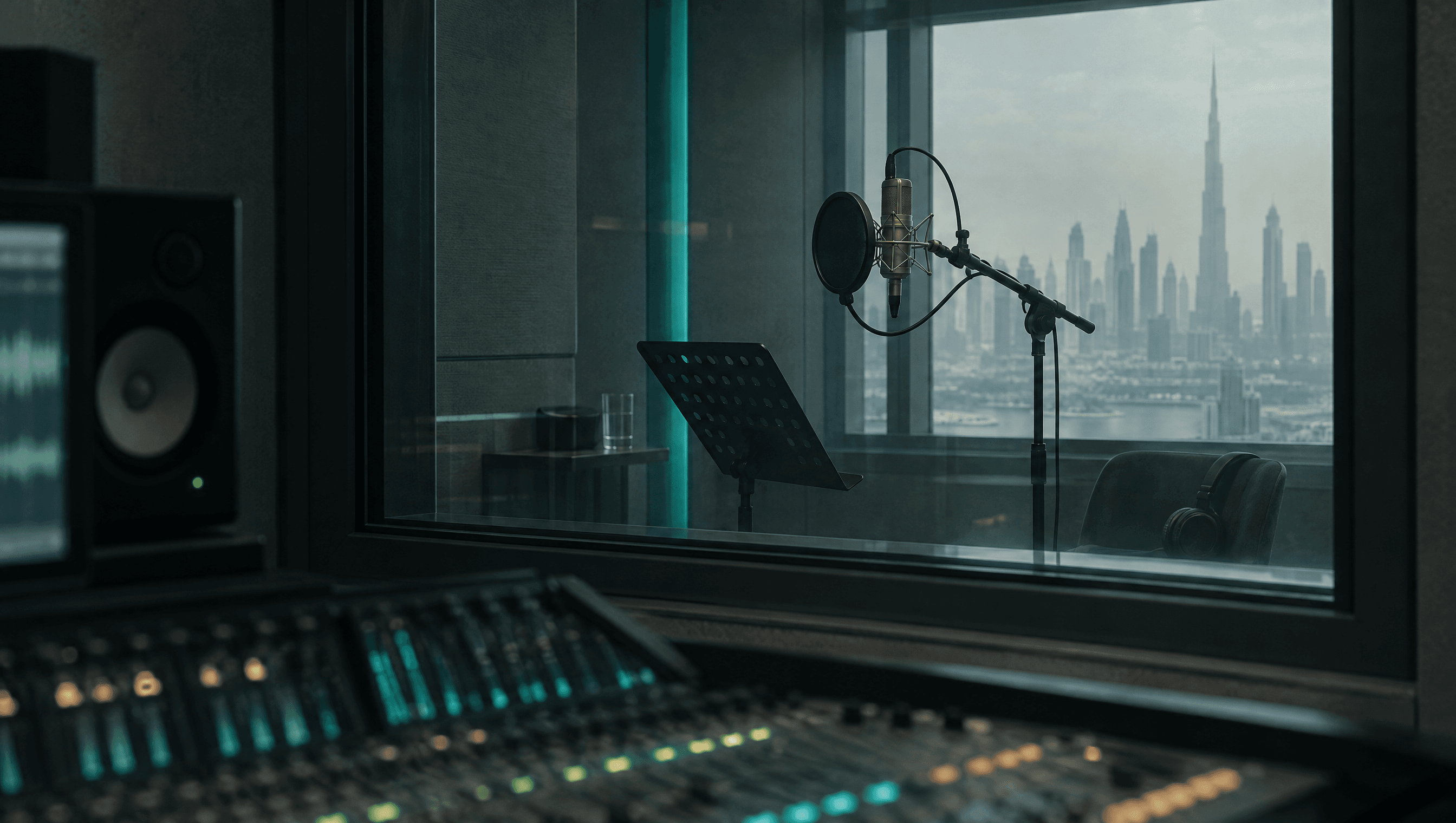
"Is there an ElevenLabs alternative for Arabic?" is one of the most common questions Gulf teams ask once they hear their first AI voiceover. ElevenLabs is excellent and supports Arabic among dozens of languages. But a voice that reads Arabic well is not the same as a voice that sounds like it is from Dubai or Riyadh. This page compares the two honestly, for Arabic specifically.
Why look for an Arabic alternative to ElevenLabs?
Three reasons come up again and again:
- Accent. General multilingual voices tend to read Arabic in a formal, broadcast register. Gulf audiences notice at once.
- Dialect scripts. Gulf copy — «شحالك», «وايد», «الحين» — needs a model that expects dialect spelling and reads it naturally.
- Cost at volume. Ads, IVR, e-learning and audiobooks run to millions of characters a month.
How do nutq and ElevenLabs compare for Arabic?
| nutq | ElevenLabs | |
|---|---|---|
| Focus | Arabic, Gulf first | General multilingual, 70+ languages on v3 |
| Arabic voices | 16 Gulf (mostly Emirati), plus Egyptian and MSA | Large shared voice library |
| Emotion control | 7 emotions as inline cues, [laughter], [sigh] (nutq-speak-3) | Audio tags on Eleven v3 |
| Voice cloning | From 6–8 seconds of audio | Yes |
| Several speakers in one request | [VoiceName] at the start of each line | Text to Dialogue |
| Live streaming | First audio about 1 s after the request (nutq-speak-2-flash) | Flash models |
| API price per 1,000 characters | $0.05, all models | $0.08 (v3, Multilingual v2), $0.04 (Flash/Turbo) |
| Free to start | $5 credit, no card | Free tier |
ElevenLabs prices are from its API pricing page in October 2026. The honest summary: if you need fifty languages, ElevenLabs covers more ground. If Arabic — and Gulf Arabic in particular — is the language that matters, a specialist is the better fit and costs less than the expressive tier.
Do my ElevenLabs scripts work in nutq?
Yes, without rewriting. nutq reads emotion cues in square brackets, and maps the common ElevenLabs tags to the nearest one:
| ElevenLabs tag | nutq reads it as |
|---|---|
[happy], [cheerful], [excited] | [excited] |
[crying], [upset], [disappointed] | [sad] |
[gentle], [soft], [warm] | [tender] |
[shocked], [gasps] | [surprised] |
[laughs], [laughing] | [laughter] — a real laugh on nutq-speak-3 |
[sighs], [exhales] | [sigh] |
[whispers], and anything unknown | skipped, never read aloud |
Move the script over, keep the tags, and listen. The full cue list is in Arabic text to speech with emotion.
How do you switch in one request?
curl -X POST https://nutq.dev/v1/speech \
  -H "Authorization: Bearer $NUTQ_API_KEY" \
  -H "Content-Type: application/json" \
  -d '{"text":"[excited] عرض نهاية الأسبوع وصل! [laughter]","voice":"alia"}' \
  --output ad.wav
The body is a WAV in a Gulf voice. Usage comes back in headers, including X-Nutq-Model, so you know which model spoke. To hear the voices first, browse the voice library or try the Arabic text to speech page.
What about live calls and voice agents?
For phone agents and live apps, speed matters more than range. nutq's streaming speech defaults to nutq-speak-2-flash, with first audio about one second after the request reaches nutq.dev at any length of text, in the same Gulf voices and emotions. Name nutq-speak-3 when you want its laughter and wider range and can accept about four seconds to first audio. Both stream raw 16-bit PCM at 8, 16, 22.05 or 24 kHz, which suits telephony.
When should you stay with ElevenLabs?
Stay if your product speaks many languages from one vendor, if you rely on features nutq does not have, or if your Arabic is formal MSA and you are happy with the result. Many teams route by language: Arabic to nutq, everything else to their existing provider. Both APIs take a text and return audio, so the router is a single if.
How do you test it?
Take three scripts you have already produced with ElevenLabs — an ad, a support line, a long narration — and generate them with nutq. New accounts get $5 of free credit, which covers 100,000 characters, at sign-up. If you are building a phone agent, see building a Gulf Arabic voice agent.
Questions people ask
What is the best ElevenLabs alternative for Arabic?
For Gulf Arabic, nutq is built specifically for the dialect: 16 Gulf voices, emotions and laughter with nutq-speak-3, and voice cloning, at $0.05 per 1,000 characters. For dozens of languages in one product, ElevenLabs remains a strong general choice; many teams use both.
Is nutq cheaper than ElevenLabs for Arabic?
At API list prices in October 2026, nutq is $0.05 per 1,000 characters for every model, including nutq-speak-3. ElevenLabs lists $0.08 per 1,000 characters for Eleven v3 and Multilingual v2, and $0.04 for Flash and Turbo.
Can I reuse my ElevenLabs scripts with audio tags?
Yes. nutq maps common ElevenLabs tags to its own cues — [happy] becomes [excited], [crying] becomes [sad], [laughing] becomes [laughter] — and silently skips tags it has no equivalent for, such as [whispers], so they are never read aloud.
Can nutq clone my voice in Arabic?
Yes. Send six to eight seconds of clear speech, or save the voice on your account and use it by name. You confirm you have the right to clone the voice when you save it.
Does nutq speak other languages too?
Yes, with trained voices: English (US and UK), Spanish, French, Italian, Portuguese, Hindi, Japanese and Chinese. Emotions are for the Arabic voices.
Written by nutq team. nutq is an Arabic speech API built in the UAE: speech to text that keeps Gulf dialect, and Arabic text to speech with voice cloning.
اقرأ بالعربيةHear it on your own audio.
$5 of credit to start — about 33 hours of transcription. No card.
Keep reading
All articles
Text to speech3 min read
Arabic text to speech with emotion: make an AI voice laugh, sigh and change mood mid-line
Most Arabic AI voices have one mood: polite. nutq-speak-3 can be excited, amused, tender or angry — and switch between them inside a sentence — because you write the emotion into the script.

Text to speech3 min read
Arabic text to speech in n8n: turn any workflow into a Gulf Arabic voice
No community node to install and no code step. One HTTP Request node, one credential, and every n8n workflow can speak Arabic — in a Gulf voice, not a newsreader's.

Text to speech3 min read
Arabic text to speech with voice cloning: a Gulf Arabic TTS guide
Six to eight seconds of someone speaking, the words they said, and the text you want read — that is all a Gulf Arabic voice clone needs. How to get a natural result, and the one trick that fixes most mispronunciations.